

In a world where the grind never stops and the hustle is glorified, it’s easy to forget that work shouldn’t consume every waking moment. Enter: work life balance speakers. They don’t just preach: they inspire, motivate, and bring a well-needed dose of sanity to offices everywhere. Imagine attending a conference where someone crafts a work-life equilibrium so appealing, you question why you ever worked overtime in the first place. Ready to unleash a healthier approach to business? Let’s immerse.
Understanding Work Life Balance
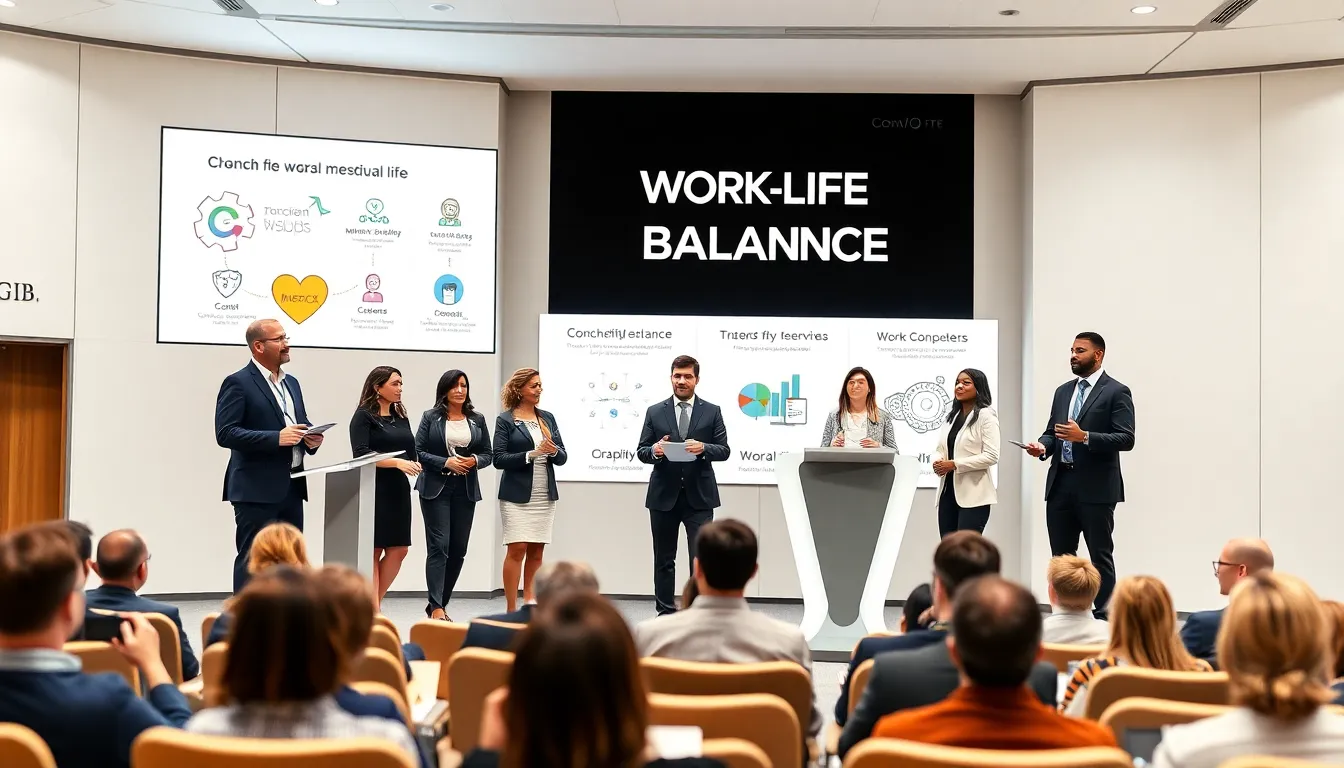
Work-life balance is more than just a trending term: it’s a crucial aspect of modern employment. Defined simply, it refers to the equilibrium between personal and professional life.
The Components of Work Life Balance
Finding work life balance involves juggling responsibilities at work with personal interests, family time, and self-care. A balanced life means less stress and greater fulfillment. It’s about knowing when to step away from the laptop and engage with loved ones, or enjoy a hobby that rejuvenates the mind.
The Evolving Nature of Work Life Balance
Traditionally, the 9-to-5 grind dictated life, often at the expense of personal time. But, with the advent of remote work and flexible schedules, the perception of work-life balance has dramatically shifted. The focus now is on productivity rather than the time spent at a desk.
The Role of Culture in Work Life Balance
Also, workplace culture plays a fundamental role. Companies championing work-life balance tend to exemplify lower employee turnover and higher job satisfaction. Employees are happier when they can unplug and recharge.
Understanding work life balance isn’t just about time management, it’s about creating environments that foster health, happiness, and harmony.
The Importance of Work Life Balance
The importance of work life balance can’t be overstated. It influences overall happiness, productivity, and even mental health.
Health Benefits
For starters, achieving a balance can prevent burnout, a growing epidemic among professionals. Chronic stress can lead to serious health issues like anxiety, depression, and numerous physical ailments. But, individuals who maintain a good work-life balance may experience improved mental health, better relationships, and increased productivity.
Enhanced Productivity
Interestingly, when employees feel that their work-life is balanced, their efficiency often skyrockets. They come to work revitalized rather than drained. A happy employee is a productive one, this simple truth attests to the importance of fostering a balanced lifestyle.
Employee Retention
Beyond individual benefits, companies also reap the rewards. Organizations that prioritize employees’ well-being tend to enjoy lower attrition rates. Employees value companies that recognize their need for balance, often leading to loyalty and long-term productivity.
Top Work Life Balance Speakers
When companies seek to improve their work-life balance culture, turning to experienced speakers can be invaluable. Here are some top names in the field:
1. Shawn Achor
Shawn Achor, a renowned psychologist, is famous for his work on happiness and productivity. His talks investigate into how positive psychology can enhance work-life balance, inspiring individuals to adopt a more positive outlook at work.
2. Simon Sinek
Famed for his ‘Start with Why’ philosophy, Simon Sinek advocates for understanding the purpose behind one’s work. His discussions encourage individuals to find meaning, eventually pushing for a healthy work-life dynamic.
3. Arianna Huffington
Founder of the Huffington Post, Arianna Huffington is a fierce advocate for well-being. She emphasizes the necessity of rest and its link to innovation and productivity. Her talks often leave the audience reconsidering their relationship with work and the importance of sleep.
4. Adam Grant
Psychologist and best-selling author, Adam Grant focuses on workplace dynamics. His insights into collaboration, communication, and flexibility help reshape corporate culture, making work-life balance a priority.
How to Choose a Work Life Balance Speaker
Selecting the right work life balance speaker is not a trivial task. Organizations need to consider several factors:
Expertise and Credentials
Firstly, investigate into the credentials of potential speakers. Understanding their background, prior engagements, and expertise in work-life balance can help ensure they align with your organizational values.
Tailored Content
Choose speakers that tailor their content to your specific needs. A one-size-fits-all approach rarely yields the best results. Great speakers will customize their message to address the unique challenges and culture of your company.
Engagement Style
Finally, choose speakers who engage and resonate with the audience. Their ability to connect and energize your workforce can make all the difference. A speaker who can infuse humor while delivering essential life lessons tends to leave a lasting impression.
Impact of Speakers on Corporate Culture
The presence of skilled work life balance speakers can profoundly affect corporate culture.
Shaping Perspectives
These speakers not only provide practical tips but also shape employees’ perspectives on balancing their professional and personal lives. Their narratives often act as catalysts for change, inspiring individuals to rethink their own habits.
Creating Safe Spaces
Besides, speakers help create a safe space for employees. Open conversations about balance lead to healthier dialogue around mental health and well-being. This encourages team members to communicate openly about their struggles, benefiting the company’s overall atmosphere.
Boosting Morale
Finally, motivational speakers have been known to boost morale within teams. Employees leave feeling inspired and motivated, ready to infuse their newfound knowledge into their daily routines.
Effective Strategies for Implementing Work Life Balance
Implementing effective work life balance strategies can be a game changer for organizations.
Encouraging Flexible Schedules
One of the most actionable strategies companies can adopt is introducing flexible work schedules. This empowers employees to manage their time effectively, making it easier to juggle personal commitments.
Promoting Wellness Programs
Also, wellness programs that address both mental and physical health play a crucial role. Offering mindfulness sessions, fitness challenges, or even meditation can support overall employee well-being.
Open Communication Channels
Also, creating an environment where dialogue is encouraged is essential. Open communication about expectations and workloads can prevent feelings of overwhelm.
Setting Boundaries
Finally, teaching employees how to set boundaries can help in reinforcing a healthy work-life balance. Encouraging them to recognize when to disconnect ensures they don’t fall into the trap of constant availability.